Honorlock Setup: Everything You Need to Know

Honorlock Setup: Everything You Need to Know

Honorlock Exam Setup and Proctoring Guidelines

This guide explains how to prepare for exams in Canvas, what to expect when using Honorlock, and how to get help before or during an exam.

Students should review the Canvas pages found in the exam module before testing. Each exam module includes important exam expectations, setup steps, permitted resources, and testing rules. The Honorlock start page is located on the last page of the exam module in Canvas, after the pages that explain the exam guidelines, expectations, and setup steps.

Important: If you experience technical issues with Honorlock, are disconnected from an exam, or are unable to continue, please contact the TEL Support team at support@tel-education.org as soon as possible. Canvas instructors do not oversee device setup or the Honorlock virtual proctoring process.

Approved Proctoring Methods

All course exams must be completed using one of the approved proctoring methods below.

Option 1: Virtual Proctoring with Honorlock

If in-person proctoring is not available, students must use TEL’s third-party virtual proctoring service, Honorlock. Honorlock requires students to use Google Chrome, install and enable the Honorlock Chrome extension, complete identity verification, and follow all expectations and setup steps in their exam module.

Honorlock virtual proctoring is available 24/7 within the exam availability window set in Canvas, and no separate scheduling appointment is required. Students must provide a clear live scan of an accepted photo ID so Honorlock can verify that the student’s identity matches the on-screen exam identity. If a student cannot obtain a student ID from their school or does not have an institution-issued, state-issued, government-issued photo ID, or passport to present to the camera, they must contact support@tel-education.org before the exam to request approval for an alternative option, such as using a parent or guardian’s ID for the Honorlock ID scan.

Option 2: Approved In-Person Proctoring

Some schools may allow students to test in person with an approved school-authorized proctor, such as a teacher, counselor, administrator, or dual-credit advisor. In-person proctoring must be arranged and approved in advance, well before the scheduled due dates.

For in-person testing, the approved proctor must request the Honorlock Bypass PIN from TEL Support before the scheduled exam session. The PIN is entered by the approved proctor only and must not be shared with the student or any unauthorized individual.

If a student is testing in person with an approved proctor, the student should not continue through Honorlock’s standard virtual proctoring process. The approved proctor will follow the in-person proctoring instructions provided by TEL.

Browser Extension Reminder: The Honorlock Chrome extension is required for both virtual and approved in-person proctoring, as the exam start page must be activated through Honorlock before the exam can begin.

General Exam FAQ

Use the drop-down questions below for general exam preparation, regardless of which approved proctoring method is used.
How should I prepare before taking a proctored exam?

Before testing, review your exam instructions and rules in Canvas, confirm that your device meets the technology requirements, and make sure you know how to contact support if you need help.

  • Review the Exam Expectations page in your Canvas exam module.
  • Confirm your device meets the minimum system requirements.
  • Use Google Chrome on a laptop, desktop, or Chromebook.
  • Install and enable the Honorlock Chrome extension before launching the exam.
  • Allow camera and microphone permissions in Chrome before beginning the Honorlock setup process.
  • Close unnecessary browser tabs, programs, and downloads.
  • Check your internet connection. A wired connection is preferred when available.
  • Clear your desk or workspace of unauthorized materials.
  • Choose a quiet, well-lit testing location that is free of distractions.
  • Run the Honorlock system check before exam day when possible.
  • Navigate to the last page of the exam module in Canvas when you are ready to begin.
Are all exams required to be proctored?

Yes. All course exams must be completed using one of the approved proctoring methods for the course: Honorlock virtual proctoring or approved in-person proctoring scheduled in advance with a school-authorized proctor.

Honorlock virtual proctoring is used when in-person proctoring is not available through the student’s school. Honorlock is available 24/7 within the exam availability window in Canvas and does not require a separate appointment. Students using Honorlock do not need an access code to begin. They must use Google Chrome on a laptop, desktop, or Chromebook with the Honorlock extension installed and enabled.

Approved in-person proctoring may be available through the student’s school upon advance arrangement with a school-authorized proctor, such as a teacher, counselor, administrator, or dual-credit advisor. In-person proctors must be verified and receive the correct instructions before administering an exam.

Important: Students testing in person with an approved school proctor should not continue through Honorlock’s standard virtual proctoring process. The approved proctor must follow the in-person proctoring instructions and enter the Honorlock Bypass PIN. The PIN is for proctor use only and must not be shared with students.

For in-person testing, the approved proctor should contact the TEL Support Team in advance at support@tel-education.org so they can be verified and receive the proper exam instructions. Whenever possible, the proctor should request the Honorlock Bypass PIN at least 48 hours before the scheduled exam session.

Students should review the instructions and expectations in the exam module before starting. The Honorlock start page is located on the last page of the exam module in Canvas.

Use the chart below to determine which proctoring method applies to you:

Proctoring Method When to Use This Method What to Expect
Virtual Proctoring with Honorlock
For fully online, remote, or independent students, or when in-person proctoring is not available through the school.
Virtual proctoring with Honorlock
Use this method if you do not have an approved in-person proctor arranged through your school.
  • Available 24/7 within the course exam availability window.
  • No access code is required for virtual proctoring.
  • Requires Google Chrome on a laptop, desktop, or Chromebook.
  • Requires the Honorlock Chrome extension to be installed and enabled.
  • Requires camera and microphone permissions in Chrome.
  • Requires a valid photo ID for identity verification: Valid ID Requirements.
  • May include an environment or room scan before the exam begins.
Approved In-Person Proctoring
For students testing with a verified school-authorized proctor.
Approved in-person proctoring
Use this method only if your school offers in-person proctoring and you have scheduled your exam with an approved school-authorized proctor in advance.
  • Must be scheduled in advance with a school-authorized proctor.
  • Exam is overseen in person by an authorized teacher, counselor, administrator, or dual-credit advisor.
  • Requires Google Chrome on a laptop, desktop, or Chromebook.
  • Requires the Honorlock Chrome extension to be installed and enabled.
  • The approved proctor must enter the Honorlock Bypass PIN to start the exam: Bypass PIN Best Practices.
  • Photo ID scan is not required because the school proctor verifies identity in person.
  • Students should not proceed through the standard Honorlock virtual proctoring flow.

Helpful resource: Honorlock Bypass PIN Best Practices

What can help reduce test anxiety before an exam?

Feeling nervous before a proctored exam is common, especially if it is your first time completing a proctored Canvas exam. Preparation can reduce stress because you know what to expect before the exam begins.

  • Review the exam expectations and permitted resources in Canvas before exam day.
  • Make a list of topics you still need to review and focus on one section at a time.
  • Create practice questions from your notes or course material to check your understanding.
  • Check your device, internet connection, webcam, microphone, and Honorlock extension ahead of time.
  • Prepare your testing space early so you are not rushing before the exam.
  • Take a few slow breaths before starting and begin only when your workspace and device are ready.
Where can I get help before or during an exam?

If you are unable to begin the exam, are disconnected, or need additional help, contact TEL Support right away at support@tel-education.org.

Canvas instructors do not oversee Honorlock’s technical setup or live proctoring process. For technical issues, contact TEL Support as soon as possible so the issue can be documented and reviewed.

What should I do if Canvas, Honorlock, or an approved exam resource is blocked?

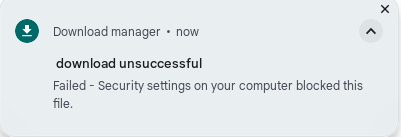
Some students may see a blocked or restricted access message when trying to open Canvas course pages, videos, approved exam resources, Google links, or Honorlock. This most commonly happens when a student is using a school-issued device, school-managed Chrome profile, school email account, or school network with existing filters or browser restrictions.

  1. If this happens, it does not always mean the resource is unavailable. The resource may be part of the course or approved for the exam, but the device, browser profile, or network may need additional permission from your school to access it.

    Examples of error messages:


Recommended first step: If you are using a school-managed account, a school-issued device, or a school network, contact your school’s technology team or your primary dual-credit enrollment contact as soon as possible. They may collaborate with TEL to ensure all necessary Technology Requirements & Whitelisting are in place for you at the administrative level.

Open-course exam reminder: Some exams allow students to use approved course content in Canvas while testing. Students should only use the resources allowed in the exam instructions. If an approved open-course resource is blocked, do not open extra websites or search for outside materials. Review the Open-Course Exam Overview and contact the TEL Support Team if you cannot continue.

Safe troubleshooting steps students may try:

  • Refresh the Canvas or exam page.
  • Confirm you are using Google Chrome on a laptop, desktop, or Chromebook.
  • Make sure the Honorlock extension is installed and enabled.
  • Close extra tabs, programs, and downloads.
  • Try signing out of a school-managed Chrome profile if your school allows it.
  • Try a personal Chrome profile, personal device, or another computer that meets the Canvas and course technology requirements.
  • Try a different internet connection if the school network is blocking required resources.
  • Clear cache and cookies, then restart Chrome.

Important: If you are unable to continue an exam, access Canvas, or resolve the issue after trying the steps above, please contact the TEL Support Team as soon as possible. Include the course name, a screenshot of the issue, and whether you are using a school-issued device, a school-managed Chrome profile, or what may be preventing access.

Contact the TEL Support Team at support@tel-education.org.

Helpful resources:

What happens if my exam session is flagged for review?

Exam sessions may be flagged for further review if Honorlock’s virtual monitoring system or an approved in-person proctor reports activity that may not align with the proctoring guidelines listed in the exam module. A flag does not automatically mean a violation occurred. It means the exam session may need to be reviewed for possible academic integrity concerns based on the testing environment, student behavior, device activity, or other proctoring requirements.

  1. Students who are flagged for possible academic integrity concerns related to proctoring guidelines will be officially notified by email from Instructionalservices@tel-education.org for our records. This official notice is sent to students' primary email associated with Canvas with more information and further steps forward in the course.
  2. If no additional review is required, all multiple-choice questions should automatically appear in the Grades section of the course once a student submits their answer choices. Note: Exams that require essay-style entries or short typed responses to open-ended questions may take 5 to 7 days to be reviewed and receive a score.

Virtual Proctoring with Honorlock FAQ

The drop-down questions below apply to students using Honorlock virtual proctoring.

What happens when I start a virtually proctored exam with Honorlock?

When Honorlock is active and you open the exam in Canvas, you will be guided through the required setup steps before beginning. These may include reviewing terms, completing a short pre-test checklist, verifying your identity, and completing a room scan or 360-degree environment scan when prompted.

  • Log in to Canvas or your school’s Canvas link as you normally would.
  • Open your course and navigate to the exam module.
  • Go to the last page of the exam module after reviewing the setup and exam expectation pages.
  • Confirm the Honorlock extension is installed and active.
  • Follow the on-screen Honorlock prompts.
  • Complete the live photo ID scan and room scan when prompted.
  • Begin the exam only when you are fully ready, since the exam timer does not pause after it starts.
What should I do if I lost, misplaced, or do not have a photo ID for the Honorlock ID scan?

Students who are using Honorlock virtual proctoring are expected to have an accepted photo ID available for the live Honorlock ID scan. If a student lost, misplaced, or does not have a photo ID, they must contact the TEL Support team before the exam to discuss possible alternatives.

In some cases, TEL Support may approve an alternative identity-verification option, such as allowing the student to begin a virtual Honorlock exam using a parent or guardian’s photo ID. This option must be reviewed and recorded by support@tel-education.org in advance.

Important: Students must be on TEL Support’s approved list before the exam begins. If this approval is not already on record, Honorlock may not be able to admit the student using another person’s ID.

Once TEL Support has approved and documented the alternative ID option, the student may use the Chat with Support button, shown as a chat bubble in the Honorlock exam toolbar, to explain that TEL has approved the use of a parent or guardian ID for identity verification.

To request help before the exam, contact TEL Support at support@tel-education.org.

Does Honorlock watch me the entire time?

Honorlock uses a combination of automated monitoring and live proctor support. If the system detects something that may need review, a live proctor may check the situation and intervene only when needed.

Students should stay visible in the webcam frame, remain in the testing area, avoid talking aloud, and follow all on-screen prompts and course exam guidelines.

What does Honorlock access during an exam?

During an active virtually proctored exam, Honorlock records the screen and webcam through Chrome and uses information from Canvas to verify the testing session. Honorlock does not have access to a student’s mobile device, school network, or personal device files.

Once the exam has ended, Honorlock’s access to the exam session ends. Students may remove the Honorlock Chrome extension after completing the exam and reinstall it later if needed for another exam.

Where can I get help during an Honorlock exam session?

If you are in the Honorlock exam setup or exam session and need help, use the built-in Honorlock support option when available. If you are unable to begin the exam, are disconnected, or need additional help, contact TEL Support right away at support@tel-education.org.

Canvas instructors do not oversee Honorlock’s technical setup or live proctoring process. For technical issues, contact TEL Support as soon as possible so the issue can be documented and reviewed.

Scheduled in Advance with an In-Person School Proctor FAQ

The drop-down questions below apply only when in-person proctoring is available through the student’s school and has been arranged in advance with an approved school-authorized proctor.

Do I need a photo ID scan for approved in-person proctoring?

A photo ID scan is not required for approved in-person proctoring when a school-authorized proctor verifies the student’s identity in person.

The approved proctor is responsible for confirming the student’s identity, maintaining the testing environment, and following the in-person proctoring instructions provided by TEL.

What should students know before testing with an in-person school proctor?

Students testing in person should make sure the exam session has been arranged in advance with an approved school-authorized proctor, such as a teacher, counselor, administrator, or dual-credit advisor.

  • The approved proctor must request the Honorlock Bypass PIN from TEL Support before the scheduled exam session.
  • The proctor should request the Bypass PIN at least 48 hours before the exam session whenever possible.
  • The PIN must be entered by the approved proctor only.
  • The PIN must not be shared with the student or any unauthorized individual.
  • Students should not continue through Honorlock’s standard virtual proctoring process if they are testing in person with an approved proctor.

Proctors may review Honorlock’s Bypass PIN guidance here: Bypass PIN Best Practices.

Who can serve as an approved in-person school proctor?

Approved in-person proctors may include school-authorized staff members such as a teacher, counselor, administrator, or dual-credit advisor. The proctoring arrangement must be approved in advance and should be completed well before the scheduled due dates.

If in-person proctoring is not available through the student’s school, students must use Honorlock virtual proctoring.

Why is the bypass PIN not working for an authorized in-person proctor?

In most cases, the bypass PIN does not work because it is being entered in the wrong place. For approved in-person proctoring, enter the PIN only after selecting “Enter Accessibility Code” on the Honorlock exam start page.

If the screen asks for an “access code,” it usually means Honorlock is not fully downloaded, enabled, or active on the student’s testing device. Students using approved in-person proctoring should still have Honorlock installed and active in Chrome before the proctor begins the exam.

Compare the two screens below:

Incorrect Screen Correct Screen

“Access code” screen

If you see this screen, Honorlock is not active yet, so the bypass PIN will not work here.

Incorrect access code screen

“Enter Accessibility Code” option

This is the correct place for an approved in-person proctor to enter the Honorlock Bypass PIN after Honorlock is active.

Correct Enter Accessibility Code option

Before entering the bypass PIN, make sure Honorlock is active on the student’s testing device. The approved proctor should navigate to the last page of the exam module in Canvas, where the Honorlock exam start page appears. Once Honorlock is active, select “Enter Accessibility Code” and enter the bypass PIN there.

If Honorlock is not staying enabled, students may need to try the following:

  • Close extra browser tabs, programs, and pause any current downloads.
  • Remove or disable non-essential Chrome extensions that may interfere with Honorlock.
  • Type chrome://extensions in the Chrome address bar and confirm Honorlock is installed and turned on.
  • Restart or update the computer if needed.
  • Clear Chrome’s cookies and stored cache.
  • If needed, remove and reinstall Google Chrome or the Honorlock Chrome extension.

Important: The Honorlock Bypass PIN is for approved in-person proctor use only and must not be shared with students. If the correct field does not appear after Honorlock is active, the student or proctor should contact the TEL Support Team before proceeding.

If you still need help, contact the TEL Support Team at support@tel-education.org.

Helpful resource: Honorlock Bypass PIN Best Practices

Starting Your Honorlock Exam

Once Honorlock is installed and active, navigate to the final page of the exam module in Canvas. You will be prompted to begin the Honorlock setup process before you can access the exam.

For virtual proctoring with Honorlock, students must use Google Chrome on a laptop, desktop, or Chromebook. Mobile devices and tablets are not compatible with TEL’s Honorlock exam requirements.

  1. Use Google Chrome on a laptop, desktop, or Chromebook.
  2. Install and enable the Honorlock Chrome extension.
  3. Navigate to the last page of your exam module in Canvas.
  4. Review the Honorlock terms and conditions and select Continue when prompted.
  5. Complete the Honorlock identity verification and room scan steps.
  6. Begin the exam only after Honorlock is active and your testing area is ready.

Important Support Note: If you see a screen asking for an “access code” during virtual proctoring, this usually means Honorlock is not installed, enabled, or active in Chrome. Students using virtual proctoring do not need an access code to begin their exam.

Device, ID, and System Requirements

Confirm Honorlock Is Active in Chrome

Before launching your exam, make sure the Honorlock extension is installed and enabled in Chrome.

  • Download Google Chrome: Google Chrome
  • Download the Honorlock extension: Honorlock Chrome Extension
  • Honorlock installation guide: Install the Honorlock Extension
  • Open the Chrome Extensions menu by selecting the puzzle piece icon in the top-right corner of Chrome.
  • Confirm Honorlock is listed and enabled.
  • Pin Honorlock to your toolbar so you can confirm it remains active during the exam.
  • You may also type chrome://extensions into the Chrome address bar to confirm Honorlock is installed and turned on.

Valid ID Requirements for Virtual Proctoring

Honorlock virtual proctoring requires students to verify their identity before beginning an exam. Most government-issued or school-issued photo IDs may be accepted, including a driver’s license, passport, high school student ID, or college/university student ID.

  • Government-issued photo ID
  • Driver’s license
  • Passport
  • Institution-issued photo ID
  • High school student ID
  • College or university student ID

After accepting the Honorlock terms, students will be prompted to scan a valid photo ID to verify their identity. If there is an issue with the ID scan, a live Honorlock agent may appear to assist with verification. If no agent appears after waiting a few moments, select the Chat with Support button built into the Honorlock exam toolbar for help verifying your ID.

Students may test ID verification before the exam here: ID Verification Check Demo

Additional TEL guidance is available here: Valid ID Requirements

Note: A photo ID scan is required for Honorlock virtual proctoring. A photo ID scan is not required for approved in-person proctoring when a school-authorized proctor verifies the student’s identity in person. Please contact support@tel-education.org for more information.

Minimum System Requirements

Requirement Minimum
Device Laptop, desktop, or Chromebook; no mobile phones or tablets
Operating System Windows 10+, macOS 10.15+, or Chrome OS
Browser Google Chrome 120+
Internet Reliable internet connection; minimum 1.5 Mbps download / 750 Kbps upload
Required Tools Camera, microphone, and Honorlock Chrome extension

Test your device before exam day: Run the Honorlock System Check

Review the course technology requirements here: Technology Requirements

Exam Expectations and Testing Environment

Students should review all instructions in the exam module before beginning. Exams are timed and should be completed in one testing session. Once the exam begins, the timer continues and does not pause if you exit the exam or lose connection. We recommend bookmarking your Canvas course before testing so you can quickly return to the exam page if you accidentally exit or need to refresh.

During the Exam

  • Follow all on-screen Honorlock prompts and Canvas exam guidelines.
  • Complete the room scan or 360-degree environment scan when prompted by Honorlock.
  • Keep your face visible in the webcam frame.
  • Use a desk, table, or other flat surface whenever possible.
  • Use only one screen. Dual monitors are not permitted.
  • Do not use a cell phone, tablet, smartwatch, or other unauthorized device.
  • Do not communicate with other people during the exam.
  • Do not access outside websites, internet searches, study guides, practice exam questions, or unauthorized resources.
  • Do not use split-screen, minimize the exam window, use the browser Back button, right-click, copy and paste, or leave the active testing window unless the exam instructions specifically allow it.

Open-Course Exam Setup

Some exams allow students to use approved course content in Canvas while testing. Students should use one Chrome browser window with two tabs open unless specifically stated in the exam instructions:

  • Tab 1: The exam questions
  • Tab 2: The permitted open-course content in Canvas

Students should open the two allowed tabs before beginning the exam and connecting to Honorlock. Do not use split-screen, minimize the exam window, open outside resources, use secondary screens, or open unnecessary duplicate tabs.

Course-Specific Exception: For the English Composition I Final Exam, certain blue resource links may open in a new tab when clicked. These approved resources may also be available through the Honorlock toolbar under the allowed resources list.

For more information, review the Open-Course Exam Overview: https://teleducation.zohodesk.com/portal/en/kb/articles/open

Prevent Exam Flags and Interruptions

  • Use a clear workspace: Remove unauthorized notes, papers, books, phones, and devices.
  • Choose a quiet room: Avoid loud music, TV, background conversations, or people entering the room.
  • Stay in view: Keep your face visible and avoid excessive movement away from the camera.
  • Use good lighting: Ensure your face, ID, and testing area are visible.
  • Avoid background distractions: Posters, photos, TVs, or visible writing may create flags or interruptions.
  • Limit movement and background noise: Connection loss, background movement, talking aloud, loud noises, or loss of camera focus may cause temporary pauses or live proctor check-ins to confirm your testing environment.
  • Keep Honorlock active: Do not disable the extension, close Chrome, or leave the exam session.

Back Button Warning: Clicking the browser Back button on the exam page may cause connection loss. If this happens, immediately refresh your browser, confirm Honorlock is active again, and click Resume to continue. The exam timer will continue to run.

If an exam session is flagged for possible academic integrity concerns related to proctoring guidelines, students may be officially notified by email from Instructionalservices@tel-education.org. Otherwise, completed exam scores will appear in the Grades section of the Canvas course when available.

Troubleshooting Honorlock

Common Troubleshooting Steps ▼

If the exam page is slow to load, Honorlock does not appear, or you have trouble accessing the exam, the following steps may help.

Check Camera and Microphone Permissions

  • Honorlock requires access to your camera and microphone for virtual proctoring.
  • In Chrome, go to Settings > Privacy and Security > Site Settings > Camera and Microphone.
  • You can also enter chrome://settings/content/camera or chrome://settings/content/microphone in the Chrome address bar.
  • Make sure Honorlock has permission to access both.
  • Make sure no other apps or browser tabs are using your camera or microphone.
  • Honorlock camera and microphone guide: Browser Camera Permissions

Allow Pop-Ups and Redirects

  • Go to Chrome Settings > Privacy and Security > Site Settings > Pop-ups and Redirects.
  • Allow pop-ups and redirects for Honorlock if prompted.

Update Chrome and Clear Cache

  • Confirm Chrome is up to date by entering chrome://settings/help in the address bar.
  • Chrome will automatically check for updates. Once the update is complete, select Relaunch.
  • Clear cached images, files, and cookies if Honorlock will not load correctly.
  • Restart Chrome after clearing cache or updating the browser.
  • Google cache-clearing guide: Clear cache and cookies
  • Google Chrome update page: Google Chrome Browser

Check Internet Connection

  • Confirm your internet connection is stable before beginning the exam.
  • Use a strong Wi-Fi connection or wired connection when available.
  • Hotspots are not recommended for Honorlock exams.
  • Test your internet speed at http://www.speedtest.net/.

Check Extensions and Browser Profiles

  • Disable non-essential Chrome extensions, including ad blockers, VPN extensions, or security add-ons that may interfere with Honorlock.
  • Make sure Honorlock is installed and enabled in the Chrome profile you are using for Canvas.
  • If your school-managed Chrome profile blocks Honorlock, try a separate Chrome profile or a different approved device when available.
  • Create a new Chrome profile: Create a new Chrome Profile
  • Open an incognito window: Open an incognito window

Reinstall the Honorlock Extension

  • Go to chrome://extensions/.
  • Remove the Honorlock extension by selecting Remove from Chrome.
  • Clear your cache and restart Chrome.
  • Make sure your browser and device are up to date.
  • Reinstall the extension from the Honorlock Chrome Extension link.
  • Honorlock extension troubleshooting guide: Troubleshooting the Honorlock Extension

School-Issued Device or Managed Account Restrictions

If this is a school-issued device and you still receive an error when downloading, please notify your school so they can adjust your permissions to allow Honorlock access on your device or Google profile. Although TEL does its best to provide this information before the semester, school-issued devices or school-managed Chrome accounts may have existing filters that prevent downloading certain extensions, accessing certain websites, sharing, or sending outside the organization.

If Honorlock cannot be installed or enabled on a school-managed device, contact your school’s technology team or the primary dual-credit contact to allow the required Honorlock and Canvas resources.

If students have a personal device, they may also review Honorlock’s Test Taker Quick Fixes. If the issue is not due to school security filters, students may try signing out of the school-associated Chrome profile, using a separate Chrome profile, creating a new Chrome profile if allowed, or using a separate testing computer, laptop, or Chromebook with a camera and microphone.

When using another device, students will use their specific login information and remember to sign out of Canvas when finished.

Whitelisting Honorlock as an Allowed Site

If school device or Google account settings are preventing Honorlock from downloading or activating, your school’s technical team may need to add Honorlock and related course resources as allowed sites.

Run the System Check on Your Testing Device

Before testing, run the Honorlock system check here: https://prep.honorlock.com/system-check

Honorlock Test Taker Quick Fixes

If you receive a specific error message, review Honorlock’s full list of common test-taker troubleshooting steps: https://honorlock.kb.help/test-taker-quick-fixes/

If You Disconnect During an Exam

If your connection drops, your exam freezes, or you accidentally close the exam window, navigate back to the last page of the exam module and reconnect as quickly as possible. This may happen due to Wi-Fi or browser issues, or to accidentally exiting the exam page. If you see this screen asking for an “access code,” it indicates Honorlock is NOT downloaded or enabled on the testing device:

  1. Refresh the browser page.
  2. Confirm Honorlock is still active in Chrome.
  3. Return to the exam page.

  4. Select Resume to continue the exam.

Important: Honorlock must be active before you can re-enter or continue a proctored exam. The exam timer continues and does not pause after the exam begins. Please note that No "Access Code is required to click Resume.

Contact Support

If you are unable to begin or continue your exam after trying the steps above, contact TEL Support as soon as possible.

When contacting support, include a brief explanation of the issue and any helpful screenshots. This allows TEL Support to review the situation and provide more specific troubleshooting guidance.

Helpful Honorlock Resources


    • Related Articles

    • Proctoring Rules and Requirements

      ? IMPORTANT: Students must have the Honorlock Google Chrome Extension downloaded & enabled before accessing the exam's start page. Without it, you will be unable to launch any proctored exam (online or in-person). For a successful exam proctoring ...
    • Honorlock: A Quick Guide for Students

      Honorlock: A Quick Guide for Students Honorlock is an online proctoring tool that ensures academic integrity during exams. It monitors your session via your computer's camera, microphone, and screen. Here's a simple guide to help you get started with ...
    • Troubleshooting Blocked Course Resources, Videos, Google Drive Links, and Honorlock Access

      Some students may experience issues accessing course resources, YouTube videos, Google Drive links, shared documents, or Honorlock. These issues are often caused by browser settings, school-issued device restrictions, school-managed Google accounts, ...
    • Preparing for Honorlock Exams

      Exam Proctoring - What to Expect: Please keep in mind all exams must be proctored, meaning the test will be overseen by an authorized proctor who will ensure the test-taker's identity and the test-taking environment's integrity throughout the test. ...
    • How to Troubleshoot the Honorlock Extension?

      For successful proctoring using Honorlock, students are required to complete exams on a laptop or computer. Mobile devices and tablets are not compatible with exams in Canvas. Ensuring that your device meets the technical requirements is essential ...